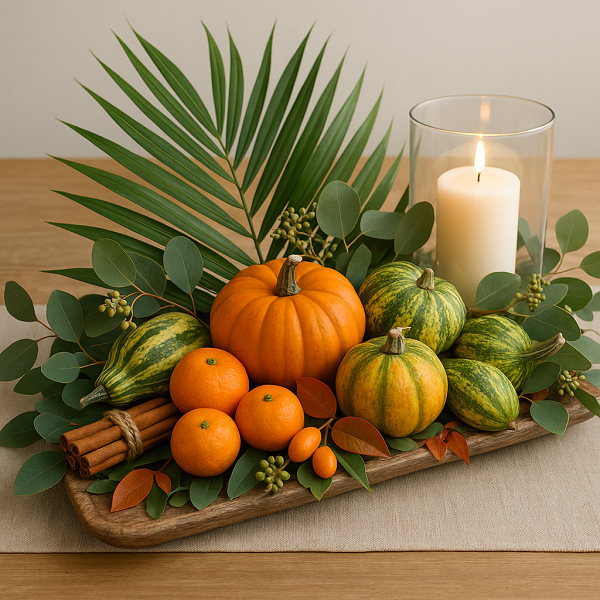
Here’s a guide to creating a local harvest centerpiece specifically suited for Florida’s warm climate, local produce and relaxed vibes.
Choose Your Vessel and Base
Choose something shallow and wide so it works as a table-centerpiece (tray, wooden box, ceramic bowl, or woven basket).
Since you’re in Florida, think relaxed and maybe coastal-rustic: driftwood tray, weathered wood box, light ceramic.
Add a base layer: burlap runner, natural linen, or even palm-frond leaves to nod to the local flora.
Choose Local Harvest Items
What counts as “local harvest” in Florida? Think of produce and plants you can source nearby:
- Small pumpkins or gourds (mini types work great).
- Citrus fruits: kumquats, tangerines, small oranges (adds bright color and a Florida touch).
- Tropical foliage or leaves: palm fronds, banana leaves, large monstera or philodendron leaves for texture.
- Eucalyptus sprigs or other greenery for filler.
- Dried or fresh wheat/grass bundles (gives that “harvest” texture).
- Berries/pods (if available locally) or make do with faux accents if you can’t find fresh.
Choose Your Color Palette and Vibe
Because you’re in Florida, you can go a little brighter and lighter than the typical deep-rust fall look:
- Palette idea: Soft oranges (pumpkins), citrus yellow/orange, deep green (foliage), muted natural tones (wood tray, burlap), maybe a touch of white or cream for contrast.
- Avoid overly heavy dark tones—let the design feel airy and tropical-inspired rather than heavy autumn.
- Use natural textures: wood, linen, burlap, palm/botanical leaves—not just faux plastic.
Build Your Arrangement
Here’s a helpful step-by-step guide (or be creative & see what you come up with!):
- Place your vessel on the base / table.
- Add foliage first: lay down large leaves or greenery to create a backdrop and spread. This gives volume and shape.
- Add your larger focal items (mini pumpkins, gourds, citrus) in a balanced but not too symmetrical way.
- Fill in gaps with smaller items: citrus fruits, berries/pods, smaller gourds. Tuck some slightly under leaves so it looks layered and abundant.
- Add height variation: maybe a couple taller items (a small bundle of dried grass, or a taller gourd) at the back or one side to give dimension.
- Optional: Add candle(s) (pillar or votive) if safe and you’ll be at the table. These add warm glow in the evening.
- Final touches: Consider dusting with cinnamon sticks, or adding a few pine-cones or nuts (chestnuts, hazelnuts) for texture—though pinecones less Florida-natural, but just for look if you like.
Practical Florida-Friendly Tips
Because of the warmer climate (even in late autumn), pick items that won’t wilt quickly: fresh hardy foliage, citrus (which does fine), cured/dried elements.
If using candles outdoors or near screened-in porch, consider wind and insects—use enclosed lanterns or heavy holders.
If you’ll have it outside or near humidity, avoid very delicate flowers that wilt easily.
Make it ahead of time—but check produce freshness the day of the event (pumpkins/gourds should be firm; citrus fresh).
After use: many of the produce items (citrus, small gourds) can be eaten or composted, making this eco-friendly.
Sample Centerpiece Idea
Let’s put it together:
- Vessel: A 16” driftwood tray with a natural linen runner.
- Foliage: Two large palm fronds laid crisscrossed, plus eucalyptus sprigs around edges.
- Main items: Three mini orange pumpkins, four small tangerines, two green/gold gourds. Arrange with one pumpkin centrally, tangerines grouped in front, another pumpkin/gourd slightly elevated behind.
- Fillers: Few kumquats, a handful of cinnamon sticks tied with twine laid lengthwise, and a small bunch of dried wheat.
- Optional: One clear glass hurricane with a white pillar candle at one end of tray.
- Final: Scatter eucalyptus leaves and small berries/pods for texture, maybe a few coral-or reddish leaves to capture “autumn” feel even in Florida.